Why Organic Content Still Wins — Even When You're Running Ads
The LexCor Service case study, my own YouTube experiments, and why the businesses that win long-term never rely on ads alone.
Most brands treat paid ads and organic content as two separate departments — one for performance, one for "brand." In practice, the accounts that grow fastest treat them as one system. Ads buy attention right now. Organic content builds the trust that makes every future ad, every future post, and every future sale easier. One without the other is always leaving growth on the table.
I want to walk through a real example of this working — a client I've been producing content for, LexCor Service — and along the way, share where this actually clicked for me personally: my own YouTube channel, Kordikov.
The LexCor Service Case
LexCor is a good example of a business that doesn't rely on a single channel. They run paid ads through their own Meta targeting campaigns — and at the same time, we build out a steady stream of organic expert content and viral-format shorts. Full pipeline: idea, script, filming, editing, delivery. Not just an edit — the whole production.
Two TikTok videos crossed a million views each, and one Instagram Reel pulled in over 1.5 million on its own. That's the kind of number that gets screenshotted and shared internally — but it's not actually the most useful data point from the whole campaign.
The videos that get shared as "wins" aren't always the ones that move the business. Some of the highest-converting content LexCor posted sat at under 100K views — and still brought in new clients directly.
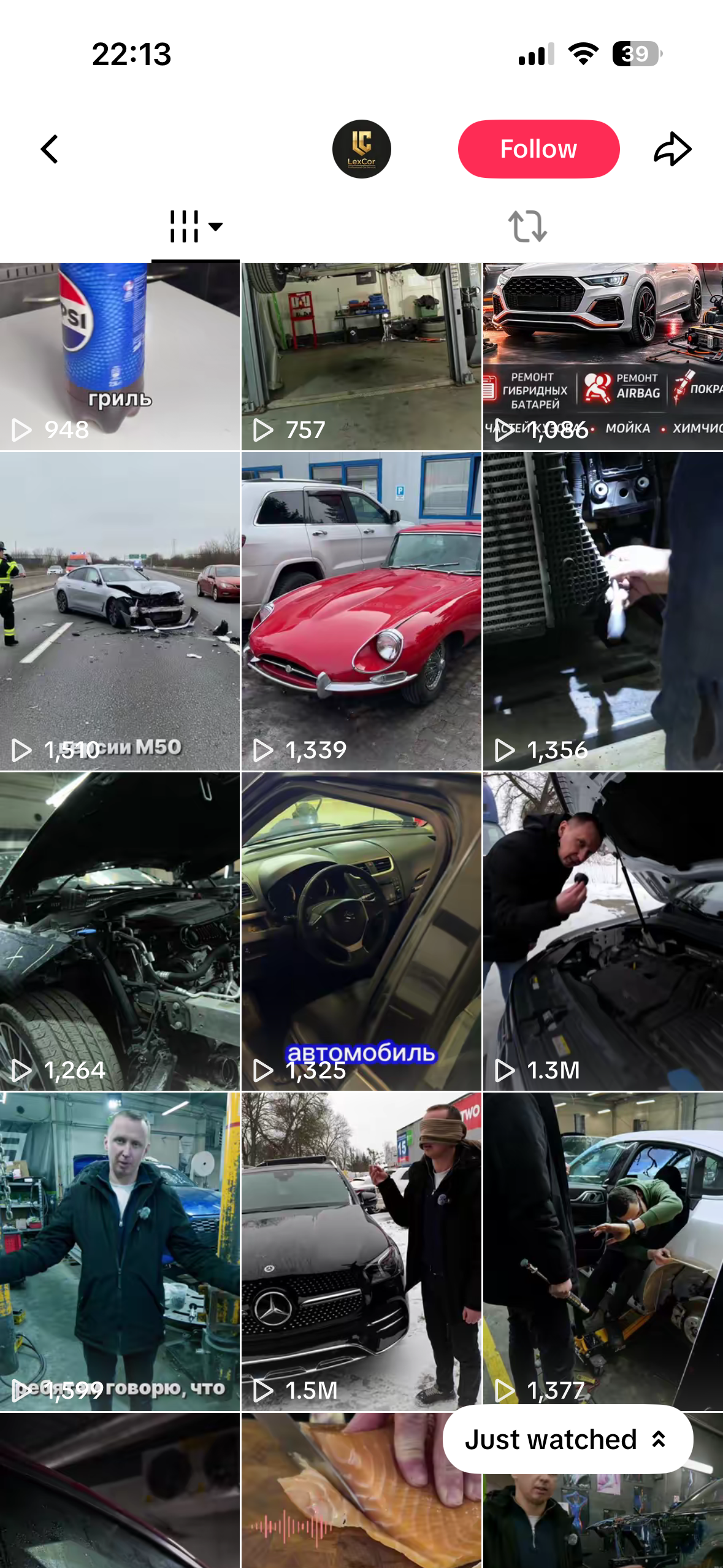
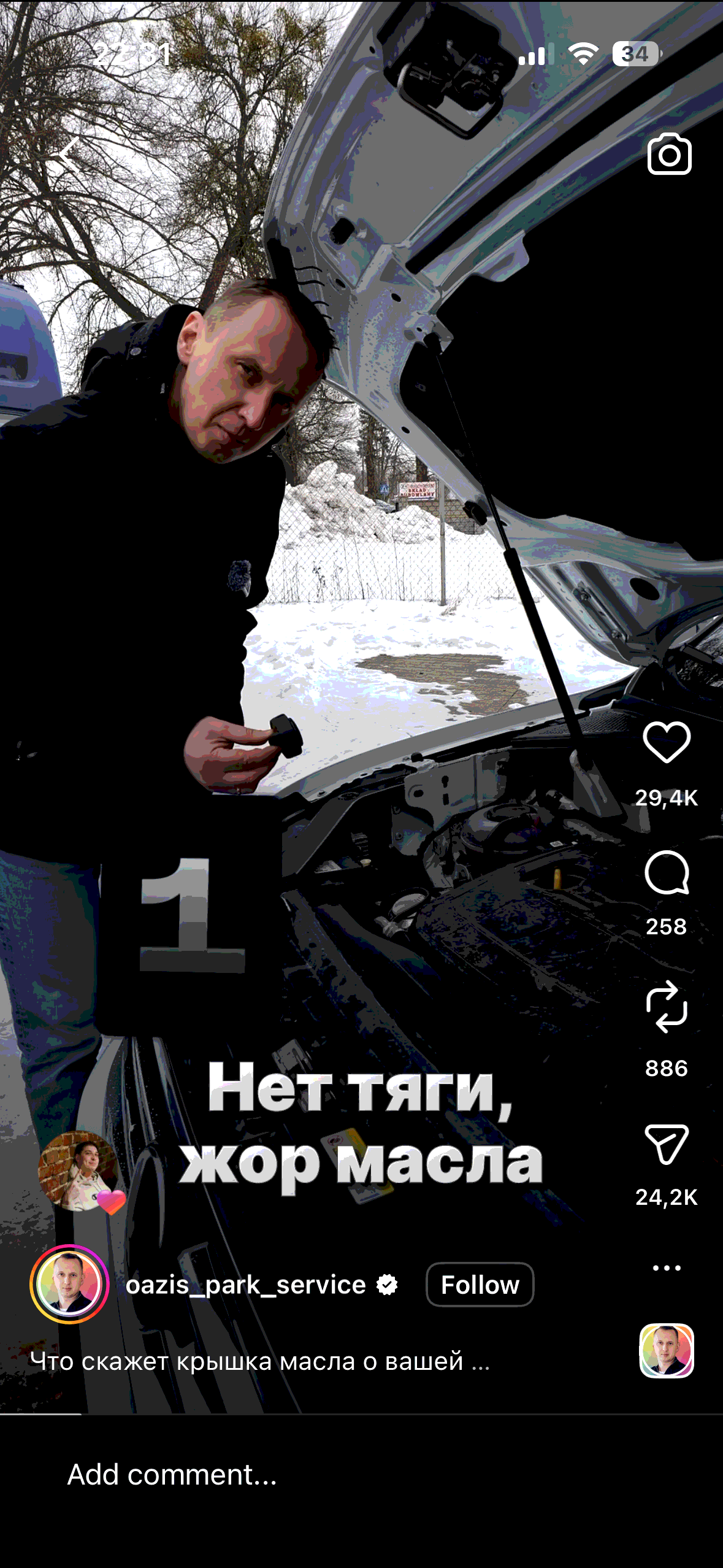
That's the part most people miss when they only look at view counts. A handful of expert-format videos, filmed in the same trend-driven style but without a single viral spike, quietly did more for new client acquisition than the videos everyone was talking about. Views are a vanity signal. Trust is the actual currency — and expert content builds trust even at modest view counts, because the person watching is already close to being a buyer.
Ads + Organic, Not Ads or Organic
LexCor uses ads the way most performance-minded businesses do — running their own targeting through Meta, testing offers, buying attention directly. What's different is that the organic side isn't an afterthought. It's built with the same production discipline as the paid creative:
- Speed-ramp style edits for the ad-facing content — fast, punchy, built for cold-traffic attention spans.
- Trend-format shorts that ride current formats but carry the brand's actual expertise inside them.
- Expert content — longer, slower, built to be found and trusted rather than to interrupt a scroll.
The combination compounds. Paid ads bring in the cold traffic. Organic and expert content is what a prospect finds when they go looking for proof before they buy — and that's exactly the moment where trust closes the gap that an ad alone can't.
One Video, Every Platform
The other piece of the system is distribution. A single piece of content shouldn't live on one platform — it gets reshared across TikTok, Instagram, Facebook, and X (Twitter), reformatted for each one rather than just re-uploaded. Same core idea, native fit everywhere it lands.
The default format is vertical — that's where the attention is, on every one of those platforms. But if the person on camera is comfortable talking at length, long-form is even better. Experts in particular tend to do well in long-form: it gives them room to actually explain something, not just deliver a hook and a punchline, and that depth is exactly what builds the kind of trust this whole approach is built around.
Why Organic Content Converts Trust, Not Just Views
Ads are effective, but viewers know they're ads. There's an inherent discount applied the moment someone recognizes paid placement. Organic and expert content doesn't carry that discount — it reads as a real answer, not a pitch, and that's precisely why it's more respected and more trusted by the person watching it.
That's also why it's free in the most literal sense — no media spend — and disproportionately powerful for a personal brand or a small business competing against companies with much bigger ad budgets. A well-produced expert video can outperform a paid placement simply because the viewer doesn't feel sold to.
The Production Side: Full-Cycle, On Location
Part of what makes this work is treating production as a full cycle rather than a single deliverable. For LexCor's content, that meant being on the ground with a camera — filming personally, in Warsaw, on a Panasonic — not just editing footage someone else shot. Idea, script, shot list, filming, and edit, all handled as one continuous process rather than handed off between different people at each stage.
That same model is something I can offer clients wherever they're based: if a business is in another country, I can help find and coordinate a local videographer who films according to the same script and shot plan, so the production quality and the strategy behind it stay consistent — even when I'm not the one holding the camera that day.
The Renovation Team is a good example of the long-form side of this. James runs a real estate renovation channel, and the content we make together leans into full before-and-after walkthroughs — long-form, expert-style, no pitch anywhere in it. It's not built to sell anything directly. What it does instead is quietly stack up as proof: every video is another piece of evidence, and every one of them is indexed content that keeps working in search long after it's published. That's not advertising — it's trust and SEO doing the job an ad can't.
Where This Clicked for Me: The Kordikov Channel
I've tested a lot of this on my own channel before applying it to client work. Kordikov started as a Russian-language channel about football — biographies, football legend stories, that kind of content. It performed genuinely well for what it was; there was a real, engaged audience for that niche.
But I wanted to push further, so I started experimenting with AI-driven, more viral-leaning formats on the same channel. That side of the channel is also pulling in strong views — different audience, different format, same underlying principle: content built around a real hook and real curiosity travels, regardless of the niche or the language it's in.
Running my own channel through both phases — the niche expert content and the AI-assisted viral experiments — is exactly what convinced me that this isn't theory. It's the same mechanism whether it's a personal channel about football legends or a service brand like LexCor: expert and organic content earns trust that ads alone can't buy, and it keeps working long after the ad spend stops.
The Takeaway
- Ads — buy attention right now, from people who don't know you yet.
- Viral / trend format — expands reach and introduces the brand to new audiences.
- Expert / organic content — builds the trust that turns a viewer into a client, often with far fewer views than the "viral" videos get credit for.
- Multi-platform distribution — vertical-first, reshared and reformatted across TikTok, Instagram, Facebook, and X — with long-form for anyone comfortable enough on camera to go deep.
- Full-cycle production — idea, script, filming, and edit as one process keeps the strategy consistent, no matter where the client is filming from.
If you're only running ads, you're paying for every single view. If you're only doing organic, you're leaving fast, predictable growth on the table. The businesses actually winning right now — LexCor included — are the ones treating both as parts of the same system, not competing budgets.
Want a content system like this for your own brand — ads, viral formats, and organic expert content working together?
Get in touch →